
How Clinicians Approach Treatment When Patients Have Multiple Anxiety Disorders

Most people who seek help for anxiety don’t walk in with one clean diagnosis. It’s common to have generalized anxiety running alongside panic attacks, social avoidance, specific phobias, or PTSD symptoms, sometimes all at once. Research shows that 60% of people diagnosed with one anxiety disorder have at least one additional anxiety or depressive diagnosis. […]
What Happens When Psychiatric Treatment Requires More Sessions Than Insurance Typically Covers

A lot of people start mental health care assuming insurance will handle it. Under the ACA, that’s mostly true, as behavioral health is a covered benefit. But there’s a gap between what a plan covers on paper and what gets approved once you’re several months in and someone at the insurer starts asking questions. This […]
How Teletherapy Fits Into Ongoing Psychiatric Treatment Plans for Chronic Conditions

Chronic psychiatric conditions don’t follow a set timeline. Depression, anxiety disorders, bipolar disorder, and PTSD are some of the conditions that often require consistent care over months or years, not a single acute episode with a clean ending. That reality is part of why teletherapy has become more than a convenient option for many patients. […]
What Happens When Patients Plateau During Anxiety Treatment and How Care Plans Adjust

A lot of patients start anxiety treatment and make real progress in the first few weeks or months. Then things slow down. Symptoms that were improving stop moving. That gap between “better” and “well” can last a long time, and it’s more common than people realize. Clinically, a plateau usually shows up as persistent symptoms, […]
How Neurofeedback Therapy Is Used When Traditional Psychiatric Treatment Is Not Effective
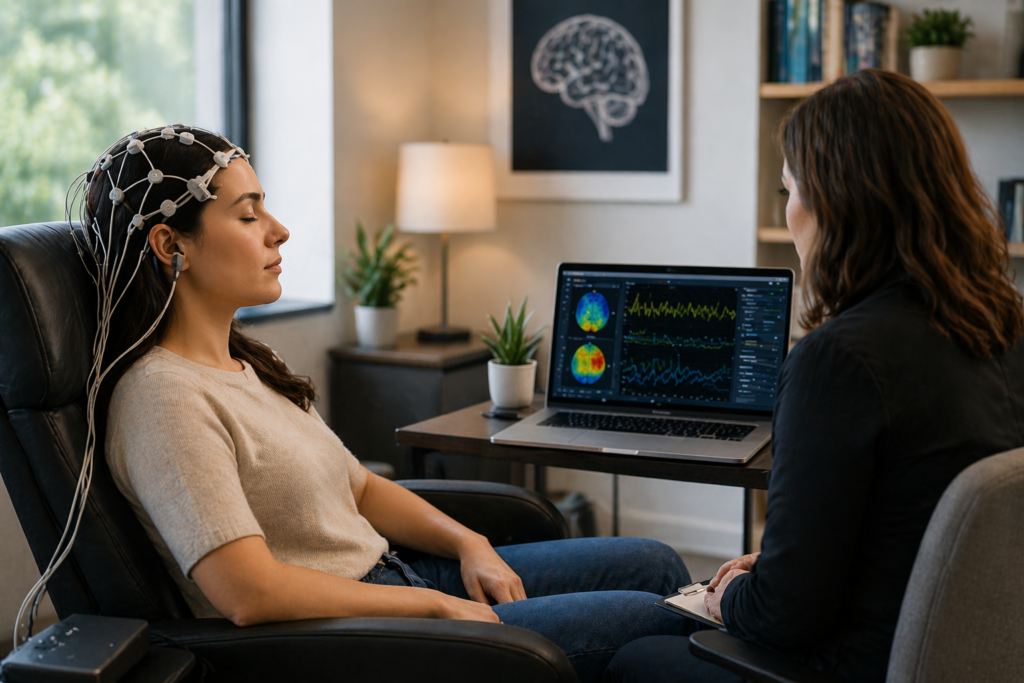
Most people who enter psychiatric treatment do so expecting things to get better. And for many, they do. However, a meaningful share of patients reach a point where the medication has been adjusted, therapy is consistent, and the results still feel incomplete. The residual symptoms, such as a mood that won’t fully lift, attention that […]
How Patients Choose Between In-Person Therapy and Online Therapy That Takes Insurance

Most people searching for mental health care are not browsing options from a comfortable position. They are working around schedules, provider availability, and cost, trying to find something that fits their lives. Most people do not start their search with a clear format in mind. They type something like “therapy near me” into a search […]
What Patients Notice in the Early Stages of TMS Therapy

Starting TMS brings up a lot of questions. You might wonder if you’ll feel something right away. Or maybe you’re bracing yourself to feel nothing at all, because that’s just how these things seem to go sometimes. That mix of hope and hesitation is standard for anyone stepping into a new kind of psychiatric treatment. […]
How TMS Therapy Fits Into a Structured Psychiatric Treatment Plan

Most people don’t hear about TMS therapy until they’re already a few steps into psychiatric treatment. That’s how the system is designed: Certain tools come up only after earlier ones have been tried. TMS is one of those tools, and knowing where it typically enters the picture can make the whole process feel a lot […]
Why TMS Therapy Is Used After Other Depression Treatment Options

Finding effective depression treatment isn’t always straightforward. For some people, medication works, and that’s the end of the story. For others, the journey looks more like a series of adjustments: different medications, different doses, and sometimes different approaches entirely. That’s not a sign of failure. It’s how treatment works for a lot of people. This […]
What Makes TMS Therapy Different From Traditional Depression Treatment

For most people diagnosed with depression, the first step is a prescription. Antidepressants are the standard for depression treatment, and for many patients, they work. But not everyone responds the same way, and some people cycle through medications for months without real relief. TMS therapy offers a different path as it works on a fundamentally […]